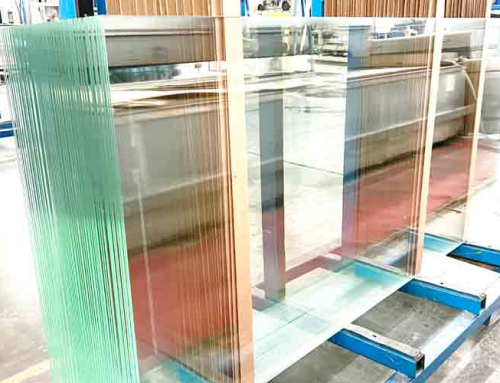
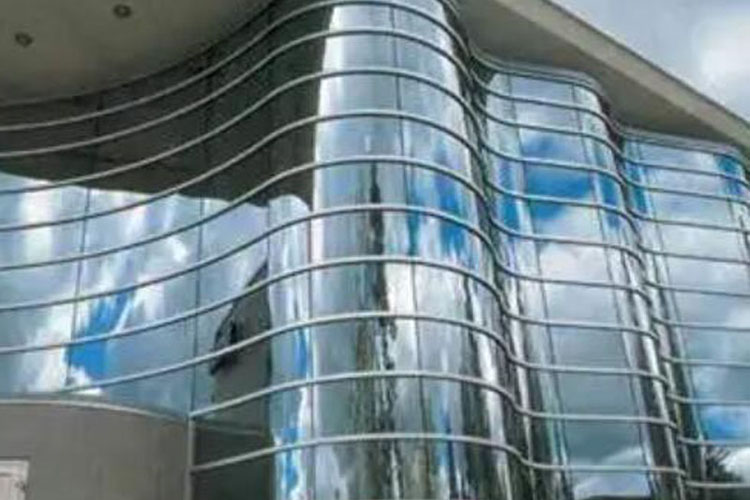
Curved tempered glass has revolutionized modern building design, enabling architects to move beyond conventional flat surfaces toward fluid, dynamic structures that redefine skylines worldwide. The manufacturing process involves heating flat glass to approximately 600°C until pliable, then shaping it against precision molds before rapid cooling. This technique produces glass four to five times stronger than standard glass while achieving smooth, continuous surfaces that capture light in remarkable ways.
Several product categories exist within this field. Single-curved glass bends in one direction, suitable for cylindrical towers or sweeping facades. Double-curved glass, also called complex curved glass, forms spherical, ellipsoidal, or conical shapes through multi-axial bending. Additional varieties include J-type, U-type, and S-type configurations. The selection depends on project requirements, with complex forms demanding advanced equipment and tighter process controls.
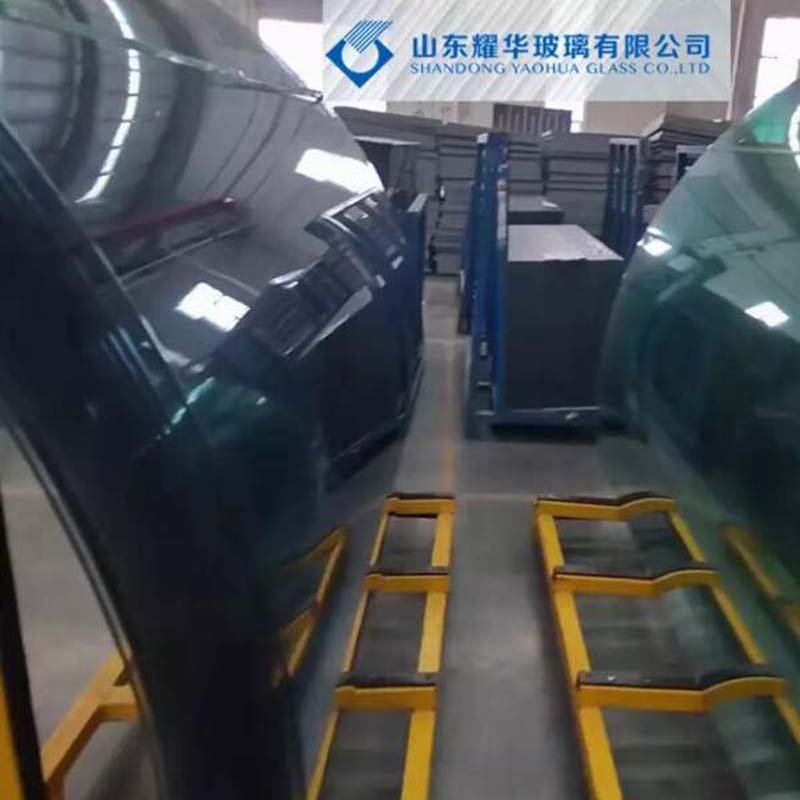
Technical parameters guide proper specification. Thickness typically ranges from 4mm to 25mm, with panel dimensions reaching 2400mm by 5000mm in advanced manufacturing facilities. Minimum bending radii depend on glass thickness—generally R≥1100mm for 10-12mm material and R≥1300mm for 15-19mm panels. Performance standards must comply with ASTM C1048, EN 12150, or equivalent national certifications. Products can incorporate Low-E coatings, ceramic frit patterns, or laminated interlayers to enhance thermal performance, safety, and acoustic insulation.
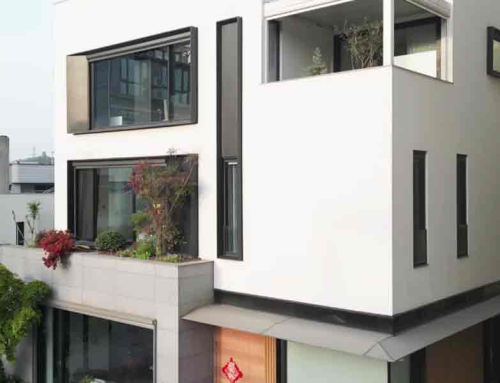
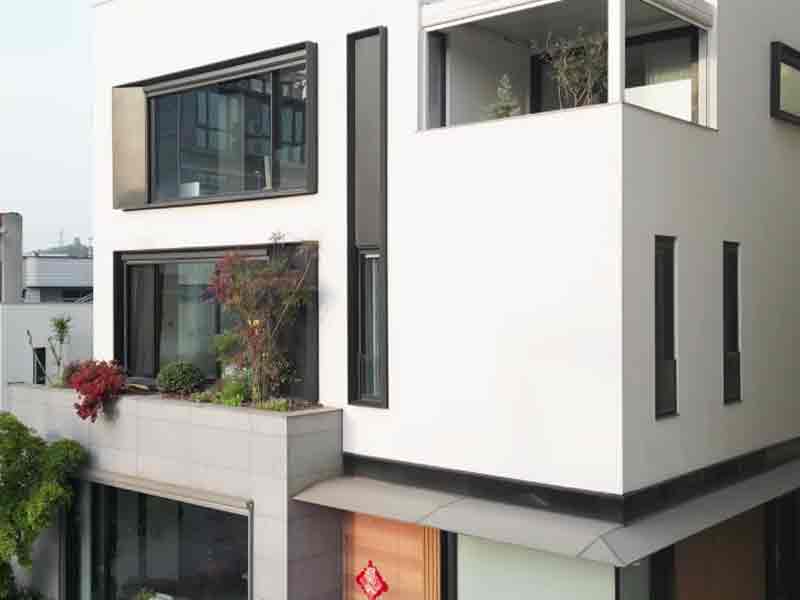
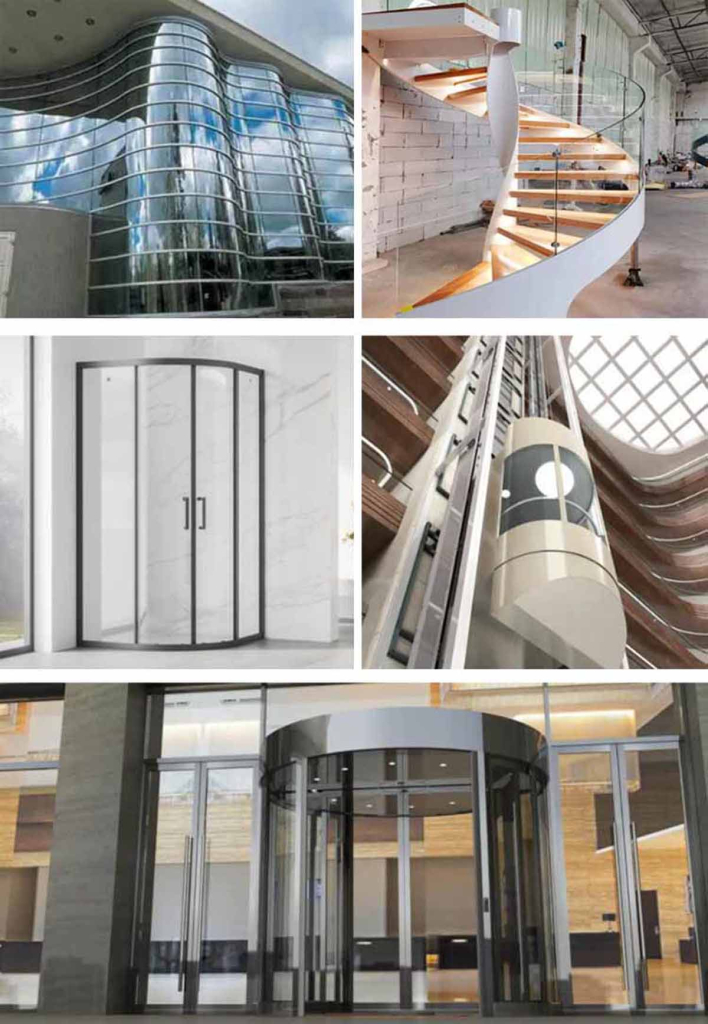
Applications span diverse architectural contexts. Commercial towers, cultural institutions, and residential developments utilize curved glass to achieve distinctive visual identities. Skylights and atriums benefit from organic overhead glazing that maximizes daylight. Sightseeing elevators and interior partitions demonstrate the material’s versatility, while stadiums and convention centers employ hyperboloid or tapered forms requiring specialized glass configurations.
Beyond aesthetics, curved glass offers structural advantages. The curved profile creates an airfoil effect that deflects wind pressures around the building perimeter, reducing critical stress zones. Tempered glass provides excellent impact resistance and withstands temperature fluctuations up to 250°C. When combined with insulating units and Low-E coatings, these systems achieve multi-functional performance including heat insulation, sound reduction, and visual clarity.
The market continues to grow as architectural designs embrace organic, flowing forms. Major airports, museums, and mixed-use developments increasingly specify curved glass for its combination of strength, transparency, and design flexibility. Manufacturers have responded with enhanced production capabilities, sophisticated quality control systems, and expanded product ranges to meet rising global demand.
As the industry evolves, curved tempered glass remains central to the creation of landmark buildings that balance aesthetic ambition with practical performance requirements. Its ability to integrate structural integrity, energy efficiency, and design innovation ensures continued relevance in contemporary architecture.